Categories


























 Refer Now


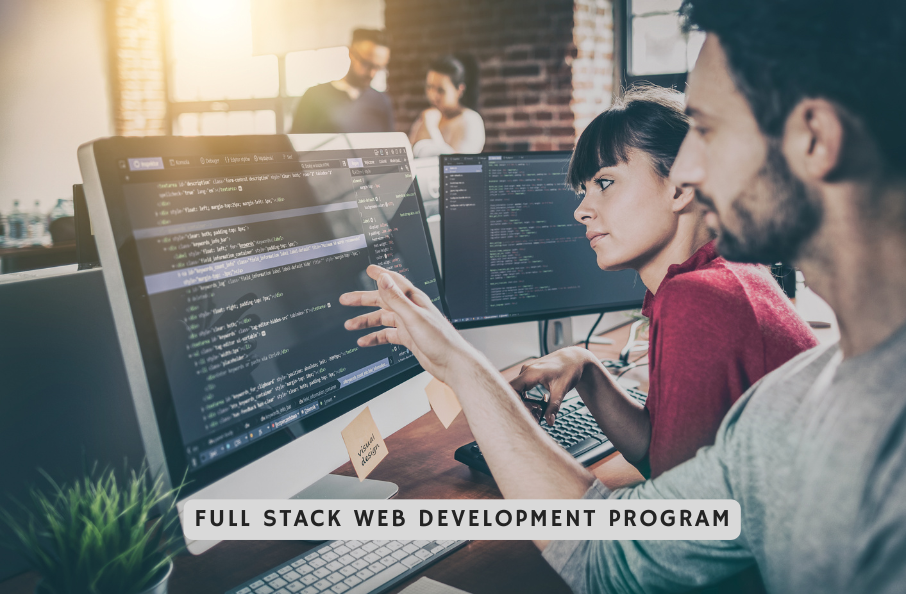
In 2026, Full Stack Development is more dynamic than ever. While MERN (MongoDB, Express.js, React, Node.js) remains foundational, modern web development has evolved. The rise of Next.js, a framework that integrates React and Node.js into a single, SEO-friendly solution, is now the preferred choice for many developers.
Exploring a career in Web Development? Apply now!
Whether you’re starting from scratch or looking to level up your skills, MERN stack remains an excellent place to begin. In this roadmap, we’ll walk you through the key skills and tools you need, and we’ll explore AI-assisted development to help you work smarter and faster. We’ll also dive into how to build your developer portfolio and land your first job in 2026.
Why Learn Full Stack Development with MERN in 2026?
Full Stack Developers in 2026 are expected to handle both the front-end and back-end of web applications with ease. The MERN stack allows you to work with modern technologies across the entire development process, from database management to creating interactive user interfaces.
However, in 2026, MERN has evolved. Many developers are now adopting Next.js which integrates both React and Node.js as the modern framework of choice. Next.js is known for its speed, built-in SEO optimization, and full-stack capabilities, making it ideal for building scalable applications.
Key Skills You Need to Become a Full Stack Developer in 2026
To succeed as a Full Stack Developer, you need a blend of technical knowledge, hands-on experience, and an understanding of modern development patterns. Let’s break down the essential skills you need:
1. Programming Languages: Python, JavaScript, and TypeScript
JavaScript continues to dominate the world of Full Stack Development. While JavaScript is the core language for the MERN stack, it’s important to learn TypeScript alongside it. TypeScript is a strongly typed superset of JavaScript that is widely used in professional environments.
Why TypeScript Matters in 2026:
TypeScript enhances your code with type safety, reducing errors in large codebases.
Almost every MERN job in 2026 will require TypeScript. Learning it could potentially double your salary prospects.
2. Modern Front-End Development: React and Next.js
While React remains the leading front-end library for building dynamic user interfaces, Next.js has become the go-to framework in 2026. Next.js is built on top of React and integrates both client-side and server-side rendering with minimal configuration.
Why React and Next.js Matter in 2026:
React allows you to build reusable components and manage dynamic states easily.
Next.js adds more power by offering automatic server-side rendering (SSR), static site generation (SSG), and better SEO features important for modern web applications that need to be fast and indexed properly by search engines.
3. Backend Development with Node.js and Express
Node.js continues to be the runtime environment of choice for running JavaScript on the server side, while Express.js is used to build RESTful APIs. In 2026, Node.js is often paired with TypeScript for better type safety and easier debugging.
Why Node.js and Express Matter in 2026:
Node.js is highly scalable and event-driven, making it perfect for modern web applications that handle multiple concurrent requests.
Express.js simplifies building robust server-side applications with its minimal and flexible architecture.
4. Database Management: MongoDB and Atlas Search
MongoDB remains the database of choice for MERN developers, but Atlas Search is increasingly popular for handling advanced search capabilities.
Why MongoDB and Atlas Search Matter in 2026:
MongoDB is a NoSQL database, which allows for flexible data storage, and is perfect for applications with ever-evolving schemas.
Atlas Search brings full-text search capabilities to MongoDB, making it ideal for building applications that require advanced search functionality, such as e-commerce platforms or social media apps.
5. Using AI in the MERN Stack
In 2026, AI-assisted development tools are changing the way developers work. Tools like GitHub Copilot and Cursor use Generative AI to assist with writing boilerplate code and debugging applications.
How to Use AI in MERN Stack Development:
GitHub Copilot can help you write Express.js routes and debug React hooks faster.
Cursor can assist in fine-tuning your Node.js server-side logic, helping you write more optimized code.
Integrating AI tools into your development workflow can boost productivity and show you have hands-on experience in AI-assisted development, which is crucial for modern developers.
6. Version Control: Git and GitHub
Understanding version control is essential for collaboration in the development process. Git is the most widely used version control system, and GitHub provides a platform to share and manage your codebase.
Why Git and GitHub Matter in 2026:
Git allows you to track changes to your code, collaborate with other developers, and manage multiple versions of your application.
GitHub remains the central hub for open-source projects and sharing code, and 2026 recruiters look for candidates with an active GitHub profile that shows consistent contributions and well-documented README files.
Visualizing the Full Stack Architecture
As a beginner, it can be challenging to visualize how all the components of the MERN stack work together. Here's a simplified architecture of a Full Stack MERN application in 2026:
[MongoDB]
↓
[Express.js API] → [Node.js Backend] → [React Frontend] → [User Interface]
This diagram shows how MongoDB (data storage) connects to Express.js (backend API) and Node.js (server environment), while the React front-end communicates with the backend to display data to the user.
Building Your First Full Stack Project
To land your first Full Stack Developer job, you need to build a strong portfolio with real-world projects. Here are three project ideas that will showcase your MERN stack skills:
-
Real-time Chat Application (Using Socket.io)
This app lets users chat in real time. It demonstrates your ability to handle WebSocket connections and build interactive user interfaces. -
E-commerce Dashboard (With Stripe Integration)
Build a dashboard for an e-commerce website, including user authentication, product management, and payment integration with Stripe. -
AI-powered Content Management System (CMS)
Create a CMS that integrates with an LLM API (e.g., GPT-4o) to generate content dynamically. This shows your proficiency with integrating AI and demonstrates cutting-edge development skills.
Optimize Your GitHub Portfolio
Recruiters in 2026 place significant weight on GitHub activity. Here’s how to optimize your GitHub profile:
-
Regularly contribute to open-source projects (keep those green squares visible).
-
Document your projects with clear README files.
-
Include your best projects with clear instructions on how to run and test them.
Conclusion
Mastering Full Stack Development using the MERN stack (and Next.js) in 2026 will set you on the path to a successful career. By learning the essential skills in JavaScript, React, Node.js, Express, and MongoDB, you can confidently build end-to-end applications. Understanding the role of AI tools like GitHub Copilot will also keep you ahead of the curve.
Start building your portfolio, contributing to GitHub, and learning TypeScript alongside MERN. By following this roadmap, you'll be well-equipped to land your first job as a Full Stack Developer in 2026 and start building modern web applications that scale.
Dreaming of a Web Development Career? Start with Web Development Certificate with Jobaaj Learnings.